About Zambia
History
Zambia's history is a rich tapestry of ancient kingdoms, colonial struggle, and the triumph of independence. From the powerful Lozi and Bemba kingdoms to the modern democratic republic, Zambia's journey is one of resilience and unity.
Ancient Kingdoms
The area was home to various Bantu-speaking peoples including the Tonga, Lozi, Bemba, and Ngoni. The Lozi Kingdom in the west (Barotseland) and the Bemba Kingdom in the north were among the most organized societies.
David Livingstone
Scottish explorer David Livingstone became the first European to see Victoria Falls in 1855, naming them after Queen Victoria. He explored much of what is now Zambia.
British South Africa Company
Cecil Rhodes' BSAC administered the territory as North-Western Rhodesia and North-Eastern Rhodesia, primarily to exploit the region's mineral wealth.
British Protectorate
The territories were merged to form Northern Rhodesia under direct British colonial rule as a protectorate.
Federation Period
Northern Rhodesia was federated with Southern Rhodesia (Zimbabwe) and Nyasaland (Malawi) in the Central African Federation, despite strong African opposition.
Independence
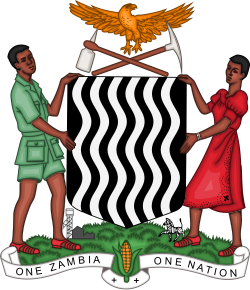
On 24th October 1964, Northern Rhodesia became the independent Republic of Zambia with Kenneth Kaunda as the first President. The country adopted multi-party democracy.
One-Party State
In 1972, Zambia became a one-party state under UNIP. This continued until 1991 when multi-party politics were restored.
Multi-Party Democracy
Frederick Chiluba won the 1991 elections. Zambia has since had peaceful transitions of power through Levy Mwanawasa, Rupiah Banda, Michael Sata, Edgar Lungu, and Hakainde Hichilema (current President since 2021).