About Zambia
Government
Political System
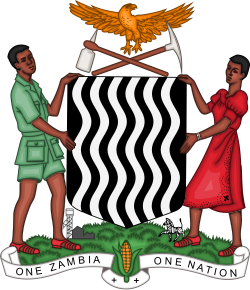
Zambia is a presidential constitutional republic. The President serves as both Head of State and Head of Government. The current President is His Excellency Hakainde Hichilema, who took office on 24th August 2021 after winning the presidential election.
The government is based on a separation of powers among the Executive, Legislature, and Judiciary. This ensures checks and balances in governance and protects democratic principles.
Executive
The President is elected by universal suffrage for a five-year term and may serve a maximum of two terms. The President appoints the Cabinet from among members of the National Assembly.
Legislature
The National Assembly consists of 156 elected members and 8 nominated members. It is the supreme legislative body responsible for making and amending laws.
Judiciary
An independent judiciary headed by the Chief Justice. The court system includes the Supreme Court, Constitutional Court, High Court, and subordinate courts.
Administrative Structure
Zambia is divided into 10 provinces: Central, Copperbelt, Eastern, Luapula, Lusaka, Muchinga, Northern, North-Western, Southern, and Western. Each province is headed by a Minister appointed by the President.
Local government operates through city councils, municipal councils, and district councils. The country has over 100 districts, each governed by a council responsible for local service delivery.
Zambia is a founding member of the African Union, a member of the United Nations, the Commonwealth of Nations, SADC (Southern African Development Community), and COMESA (Common Market for Eastern and Southern Africa).